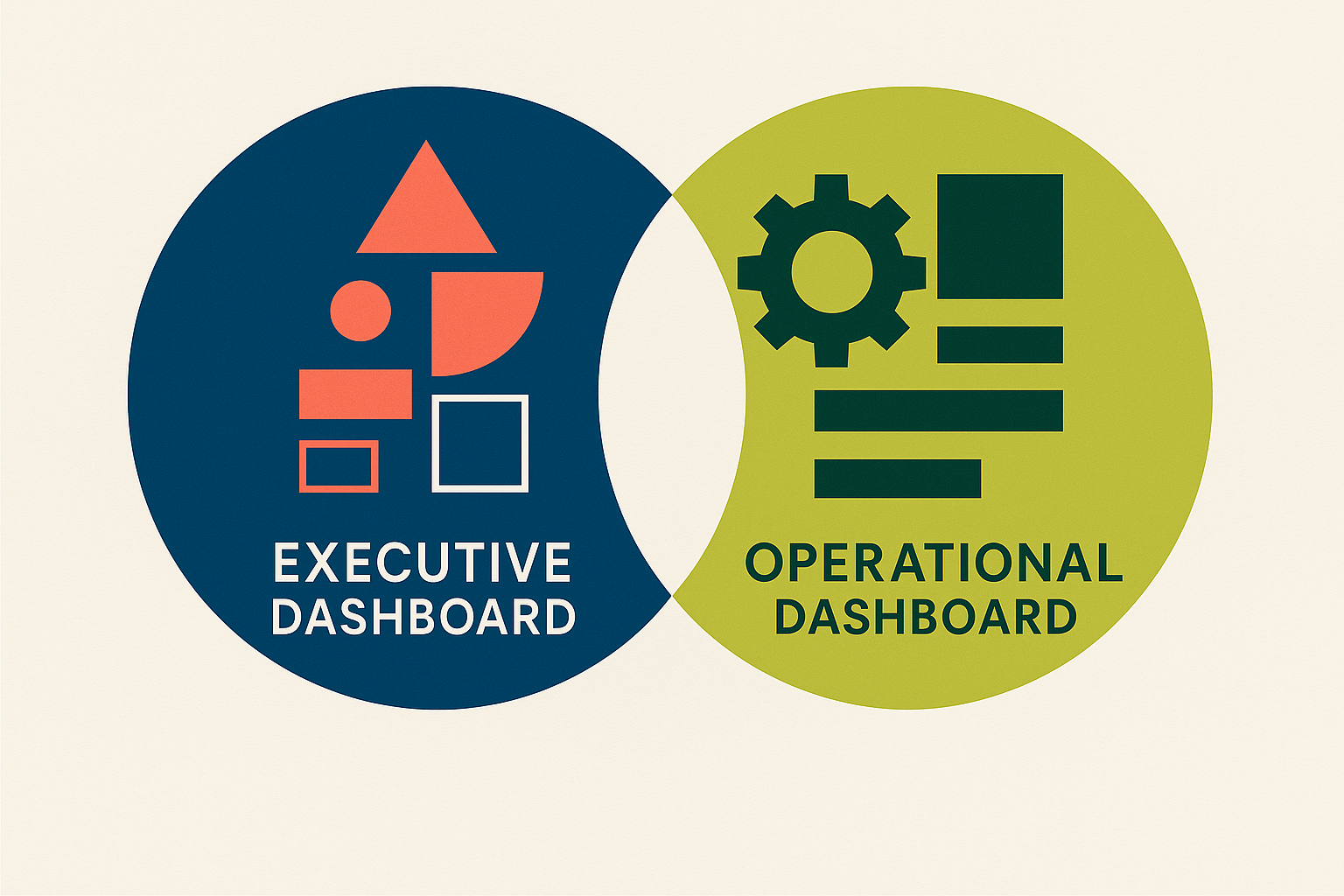
When it comes to dashboards, understanding the audience is crucial. Executive dashboards are designed for decision-makers focusing on strategic outcomes, while operational dashboards cater to managers needing a detailed view of day-to-day operations.
Who Benefits from Executive Dashboards?
Executive dashboards are crafted for the C-suite—executives like CEOs, CFOs, and COOs—who require a high-level overview to make informed strategic decisions. These dashboards aggregate data into key performance indicators (KPIs) that align with business objectives. For instance, a CEO might view a dashboard summarizing quarterly revenue growth, customer acquisition rates, and market trends. The Beacon dashboard can display these metrics in real-time, offering executives the ability to pivot strategies quickly based on current data. More on how Beacon supports strategic decision-making can be found here.
The utility of executive dashboards lies in their ability to distill vast amounts of data into digestible insights. They highlight trends and anomalies, enabling leaders to allocate resources effectively. For example, an executive might use the dashboard to identify underperforming regions and allocate additional marketing spend to boost performance.
Operational Dashboards: The Detail-Oriented Tool
Operational dashboards are the go-to for managers and team leaders who need to monitor and improve day-to-day processes. Unlike their executive counterparts, these dashboards provide granular details about specific operational metrics. A logistics manager might use an operational dashboard to track delivery times, inventory levels, and shipment errors. This level of detail helps maintain efficiency and address issues as they arise.
Operational dashboards support real-time decision-making. By offering insights into current processes, they enable managers to optimize workflows and improve productivity. For example, a call center manager might use real-time data on call wait times and operator availability to adjust staffing levels throughout the day. Detailed information about how our platforms support operational efficiency is available here.
Integrating Both for Comprehensive Insight
It's not just about choosing between executive and operational dashboards. Many organizations benefit from integrating both, ensuring that strategic goals are aligned with operational capabilities. This integration facilitates a feedback loop where strategic decisions are informed by operational realities, and operational adjustments are guided by strategic priorities.
A company might use an executive dashboard to set a strategic goal of reducing operational costs by 10% over the next year. Managers would then rely on operational dashboards to identify cost-saving opportunities in their departments, such as reducing overtime or optimizing supply chain logistics.
In conclusion, understanding the distinct audiences for executive and operational dashboards enhances their effectiveness. Tailoring the data presentation to meet the specific needs of executives and managers ensures that both strategic and operational goals are achieved efficiently.